
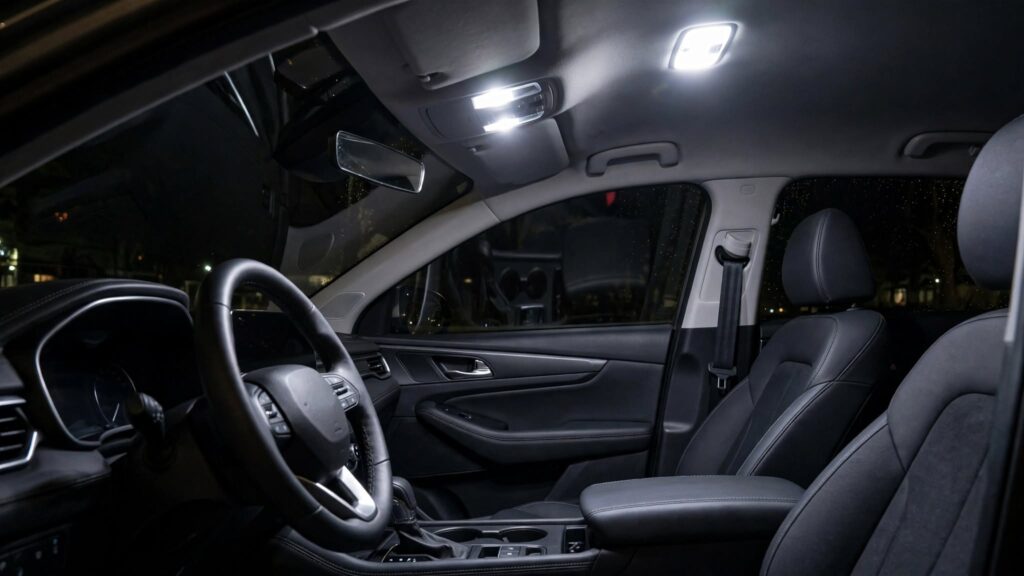
Vehicle lighting is easy to overlook until you need to find something on the floor at night, read a map, organize items in the cargo area, or check whether you left anything behind. Factory interior bulbs can provide adequate illumination, but their light output, color, and coverage may not suit every driver.
LED interior lights offer a practical way to improve cabin visibility without making major changes to the vehicle. They are available for common locations such as dome lights, map lights, footwells, glove boxes, trunks, and cargo areas. When the correct bulb type and brightness are selected, an LED upgrade can make the interior easier to use while keeping the installation relatively straightforward.
What Makes LED Interior Lights Different?
Traditional vehicle interior lighting often uses incandescent or halogen-style bulbs. These bulbs create light by heating a filament. LEDs, or light-emitting diodes, produce light using semiconductor components instead.
For everyday vehicle use, the difference is noticeable in several ways. LEDs typically produce less heat at the light source, require relatively little electrical power, and are available in a wide range of brightness levels and color temperatures. They also reach full brightness immediately when switched on.
The result is not simply a different-looking cabin. The right LED interior lighting can improve how clearly drivers and passengers see controls, personal items, storage spaces, and other details after dark.
Better Visibility Inside the Vehicle
One of the most useful reasons to install LED interior lights is improved visibility. A dim dome light may illuminate the center of the cabin while leaving footwells, door pockets, and rear seats difficult to see.
A carefully selected LED replacement can provide clearer illumination across these areas. This can be particularly useful when searching for keys, checking the rear seat, fastening a child seat, reading paperwork, or unloading items at night.
Cargo lighting is another practical example. In an SUV, van, hatchback, or pickup with covered storage, brighter LED cargo lights can make tools, groceries, luggage, and smaller objects easier to identify without relying on a phone flashlight.
Lower Power Demand for Interior Lighting
LEDs are known for producing useful illumination with relatively low electrical demand. In a vehicle, this can be helpful because interior lights sometimes remain on while the engine is switched off.
The difference may seem minor for a single dome bulb, but vehicles can have several interior lamps operating at once. Map lights, vanity lights, door lights, footwell lamps, and cargo lighting can all contribute to electrical demand.
This does not mean LED bulbs eliminate concerns about battery drain. Any light left on for an extended period can consume battery power. However, choosing efficient interior lighting can reduce unnecessary electrical load during normal use.
A Cleaner and More Functional Cabin Appearance
LED interior lights can also change how the cabin looks after dark. Older incandescent bulbs often produce a warmer, slightly yellow appearance, while LEDs are available in warm white, neutral white, and cooler white tones.
The right choice depends on how the vehicle is used. Neutral white can provide a clean appearance while keeping labels and objects easy to distinguish. Warmer lighting may feel more comfortable in a relaxed passenger cabin, while brighter white lighting may suit cargo or work vehicles where visibility matters more than atmosphere.
Extremely bright or cool-colored LEDs are not automatically better. Excessive cabin brightness can become distracting, especially when a light is switched on while driving at night.
Interior Lighting Complements Exterior Visibility Upgrades
Lighting upgrades work best when each light is chosen for its actual purpose. Interior LEDs improve visibility inside the cabin, while headlights, auxiliary driving lights, reversing lights, and other exterior lamps serve different functions outside the vehicle.
Drivers considering several lighting changes may also find How to Choose the Right LED Driving Lights for Safer Driving in the Dark useful when thinking about exterior illumination. Interior and exterior lights should be selected separately because brightness, beam control, positioning, and intended use are very different.
Choosing the Right LED Interior Bulbs
Compatibility matters more than appearance when replacing factory bulbs. Vehicles use different bulb bases, dimensions, electrical systems, and lamp housings, so an LED that physically resembles the original bulb may not necessarily work correctly.
Check the Bulb Type First
Before buying replacement LEDs, identify the original bulb specification. This can usually be found in the owner’s manual, on the existing bulb, or through reliable vehicle-specific fitment information.
Physical dimensions also matter. Some LED replacements contain larger circuit boards or additional diodes and may not fit comfortably behind the factory lens.
Select Brightness for the Location
Different areas of the vehicle need different amounts of light. A cargo compartment may benefit from strong illumination, while a front map light should provide enough visibility without creating uncomfortable glare.
Using the same high-output bulb everywhere can make the cabin unnecessarily harsh. Matching brightness to each location usually produces a more balanced result.
Consider Color Temperature
Color temperature affects how the light appears rather than simply how bright it is. Warm white has a softer appearance, while cooler white can look sharper and more modern.
For a practical everyday cabin, many drivers prefer a white tone that provides clear visibility without appearing excessively blue. Personal preference matters, but comfort should be considered alongside appearance.
Installation Is Often Simple, but Compatibility Still Matters
Many interior LED replacements can be installed by removing the lamp lens, taking out the original bulb, and fitting the LED replacement. The process varies by vehicle, and trim pieces or delicate plastic clips may require careful handling.
Some LED bulbs are polarity-sensitive. If a newly installed bulb does not illuminate, its orientation may need to be reversed where the design allows it. Certain vehicles may also react differently to LED replacements because their electrical systems monitor bulb resistance or control interior lighting electronically.
Checking compatibility before purchasing can prevent flickering, incomplete dimming, warning messages, or bulbs that remain faintly illuminated when they should be off.
Where LED Interior Lighting Makes the Most Sense
Not every interior bulb needs to be changed at once. A practical approach is to start with areas where better illumination would solve an actual problem.
Dome and map lights are useful starting points for general cabin visibility. Trunk and cargo lights can help when loading or unloading after dark. Footwell lighting can make dropped objects easier to locate, while glove box and vanity lights may benefit from modest improvements rather than maximum brightness.
Choosing upgrades by function keeps the cabin comfortable and avoids turning a simple lighting improvement into excessive illumination.
Conclusion
LED interior lights can be a sensible vehicle upgrade when chosen with compatibility, brightness, color temperature, and location in mind. They can improve visibility in the cabin and cargo area, reduce the electrical demand associated with interior illumination, and give drivers more control over how their vehicle looks and functions after dark.
The most effective upgrade is not necessarily the brightest LED available. A properly sized bulb with suitable output and a comfortable light color is usually more useful. By treating each interior light according to its purpose, drivers can create a cabin that is easier to use without sacrificing comfort or practicality.