
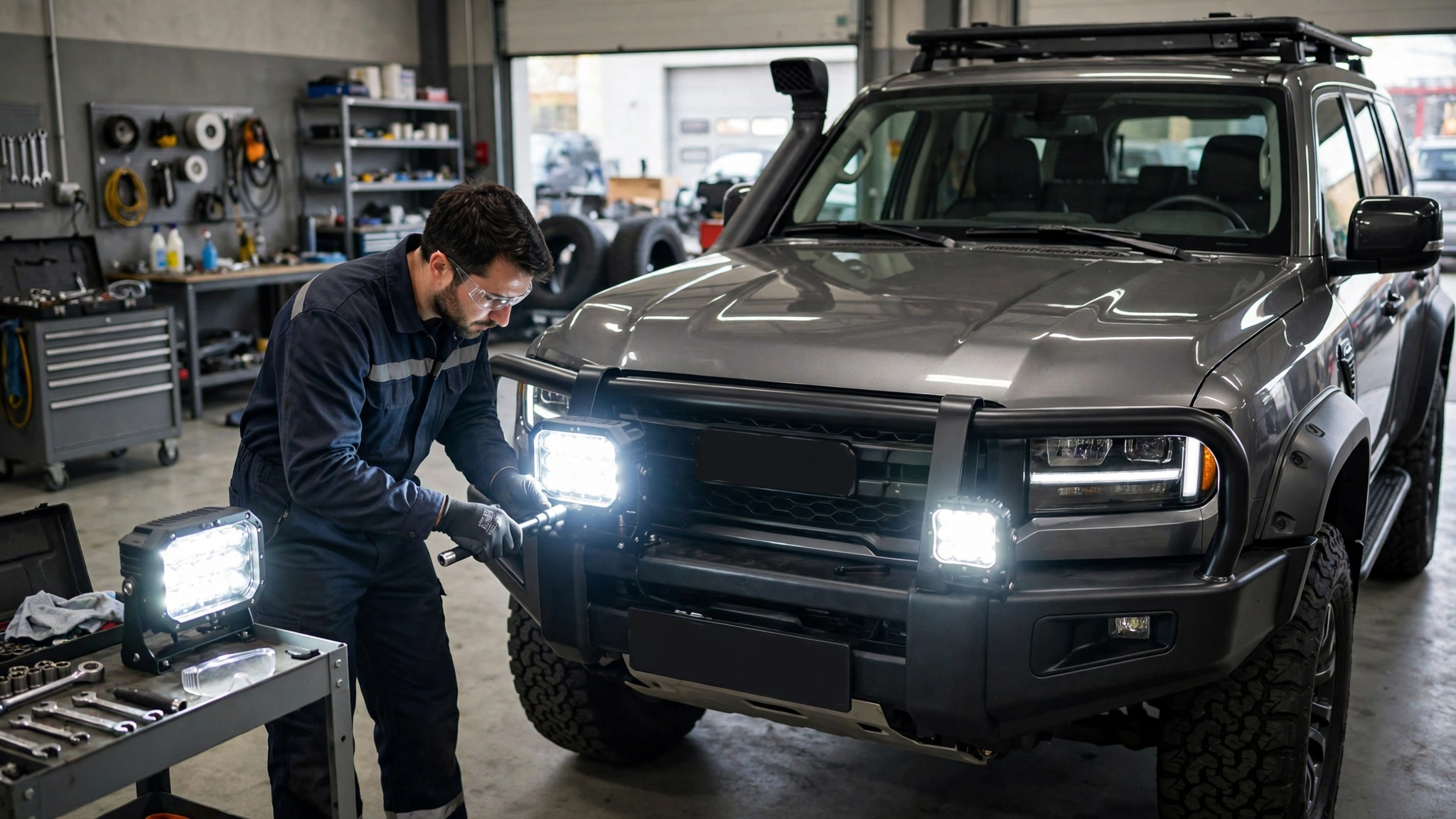
Auxiliary Light Car Service for Improved Visibility and Safety
Auxiliary light car service provides professional solutions for drivers who need better road visibility, enhanced vehicle appearance, and improved safety in challenging driving conditions. Standard factory headlights may not always provide enough illumination on dark roads, rural routes, construction sites, off-road tracks, or during severe weather. Auxiliary lighting adds extra brightness where it is needed most, helping drivers identify obstacles, road signs, pedestrians, and changes in terrain earlier.
The service includes inspection, light selection, installation, wiring, alignment, testing, repair, and replacement. Every vehicle has different electrical requirements, mounting points, and lighting needs. A professional assessment ensures the selected lights are compatible with the vehicle and installed without affecting other electrical systems.
Auxiliary lights can be fitted to cars, vans, pickup trucks, commercial vehicles, agricultural vehicles, and off-road vehicles. Whether the goal is improved long-distance visibility or wider illumination around the vehicle, the correct lighting setup can make driving safer and more comfortable.
Complete Auxiliary Lighting Solutions
Driving Light Installation
Driving lights are designed to provide additional forward visibility beyond the range of standard headlights. They are particularly useful for drivers who regularly travel on unlit roads, highways, rural routes, or long-distance journeys at night.
The installation process includes choosing a suitable mounting position, securing the light units, connecting the wiring, fitting a relay and fuse, and integrating the controls with the vehicle’s lighting system. Proper alignment is essential because incorrectly positioned lights may create glare for other road users or illuminate the wrong section of the road.
Once installed, the lights are tested under different operating conditions to confirm consistent brightness and safe performance.
LED Light Bar Fitting
LED light bars provide powerful and energy-efficient illumination across a wide area. They are commonly fitted to off-road vehicles, utility vehicles, pickup trucks, and cars used in remote or poorly lit environments.
Light bars are available in different sizes, beam patterns, and brightness levels. Spot beams project light over a longer distance, while flood beams spread illumination across a wider area. Combination light bars offer both patterns in a single unit.
Professional fitting ensures the mounting brackets remain secure during vibration and rough driving. The wiring is also protected from water, heat, dirt, and accidental damage. This helps prevent electrical faults and extends the working life of the lighting system.
Fog Light Installation and Replacement
Fog lights improve visibility during fog, heavy rain, snow, dust, and other low-visibility conditions. They are mounted lower on the vehicle to project light beneath fog and reduce reflection back toward the driver.
The service can include installing new fog lights, replacing damaged units, repairing wiring, changing bulbs, and correcting poor alignment. Different vehicles may require specific brackets, connectors, switches, or bumper modifications.
Correct positioning is important for effective performance. Lights installed too high or aimed incorrectly may reduce visibility rather than improve it. A complete test confirms the beam remains low, wide, and suitable for difficult weather conditions.
Professional Electrical Installation
Safe Wiring and Circuit Protection
Auxiliary lights require more electrical power than many standard accessories. Connecting them directly without proper protection can overload switches, damage wiring, drain the battery, or create a fire risk.
Professional installation uses suitable cable sizes, quality connectors, relays, switches, and correctly rated fuses. A relay allows the lights to draw power safely from the battery while using a low-current control switch inside the vehicle.
All wiring is routed away from hot engine components, sharp metal edges, rotating parts, and areas exposed to excessive moisture. Protective sleeving and secure clips help prevent movement, abrasion, and damage over time.
Dashboard Switch Installation
A dedicated dashboard switch allows the driver to control auxiliary lights easily and safely. The switch can be installed in an existing blank panel or another accessible location that does not interfere with normal driving controls.
Different switch styles are available, including illuminated switches that show when the auxiliary lights are active. The system may also be connected to the main beam circuit, depending on the type of light, local regulations, and the driver’s requirements.
The final installation is designed to look neat and integrated rather than temporary or poorly finished.
Battery and Alternator Assessment
Before installing high-powered auxiliary lighting, the vehicle’s battery and alternator should be checked. Additional lights increase electrical demand, especially when used alongside heating, air conditioning, audio systems, charging devices, and other accessories.
Testing helps determine whether the charging system can support the planned lighting setup. If voltage levels are unstable or the battery is weak, the issue should be addressed before installation.
This assessment reduces the risk of slow starting, battery discharge, flickering lights, or premature electrical component failure.
Auxiliary Light Repair and Maintenance
Fault Diagnosis and Electrical Testing
Auxiliary lights may stop working because of blown fuses, damaged relays, loose earth connections, broken wires, faulty switches, water-damaged connectors, or failed light units.
Electrical diagnosis identifies the exact source of the problem rather than replacing parts unnecessarily. Voltage, continuity, resistance, and grounding points can be tested to locate faults quickly.
Once the issue is found, damaged components are repaired or replaced. The complete circuit is then tested to ensure the lights operate reliably without flickering, overheating, or causing problems elsewhere in the vehicle.
Water Damage and Corrosion Repair
Auxiliary lights are often exposed to rain, mud, road salt, dust, and pressure washing. Over time, moisture can enter light housings or electrical connectors, leading to condensation, corrosion, dim lighting, or complete failure.
Maintenance may include cleaning corroded terminals, replacing seals, repairing connectors, drying light housings, and improving weather protection. Severely damaged units may need replacement.
Using waterproof connections and properly sealed cable entry points helps prevent future moisture-related problems.
Beam Alignment and Adjustment
Vehicle vibration, minor impacts, off-road use, and loose mounting brackets can cause auxiliary lights to move out of position. Poorly aligned lights may reduce useful visibility and create glare for approaching drivers.
Beam alignment ensures the lights illuminate the intended area without causing unnecessary disturbance. Driving lights are adjusted for forward distance, while fog lights are positioned to create a low and wide beam.
Mounting bolts and brackets are also checked and tightened during the adjustment process.
Benefits of Auxiliary Vehicle Lighting
Better Night-Time Visibility
Additional lighting helps drivers see further ahead and react earlier to hazards. This is especially valuable on roads without street lighting, where animals, debris, sharp bends, and pedestrians may be difficult to identify.
Improved illumination reduces eye strain and makes long night journeys more comfortable. It also provides better awareness of the road edges and surrounding environment.
Improved Off-Road Performance
Off-road driving often involves uneven terrain, mud, water, steep slopes, and limited natural lighting. Auxiliary lights provide the visibility needed to select safer routes and avoid obstacles.
Different beam patterns can be combined to illuminate both the distance ahead and the area immediately around the vehicle. This is useful for recreational driving, farming, recovery work, site operations, and remote travel.
Enhanced Vehicle Appearance
Well-designed auxiliary lights can improve the vehicle’s exterior appearance while adding practical value. Modern LED units offer clean shapes, compact designs, and bright white illumination.
Professional installation keeps brackets, wiring, and switches neat and secure. The result is a lighting upgrade that looks intentional and complements the style of the vehicle.
Reliable Auxiliary Light Car Service
Quality Parts and Secure Mounting
The performance of an auxiliary lighting system depends on both the quality of the lights and the standard of installation. Strong brackets, weather-resistant connectors, suitable wiring, and protected circuits all contribute to long-term reliability.
Every component should be selected according to the vehicle type, intended use, and environmental conditions.
Final Safety and Performance Testing
After installation or repair, the entire lighting system is tested. This includes checking brightness, switch operation, beam direction, wiring temperature, fuse protection, battery voltage, and mounting stability.
A complete final inspection confirms that the lights operate safely and provide the expected improvement in visibility. Professional auxiliary light car service delivers a practical upgrade for drivers who need dependable illumination, safer night driving, and reliable performance in demanding conditions.