
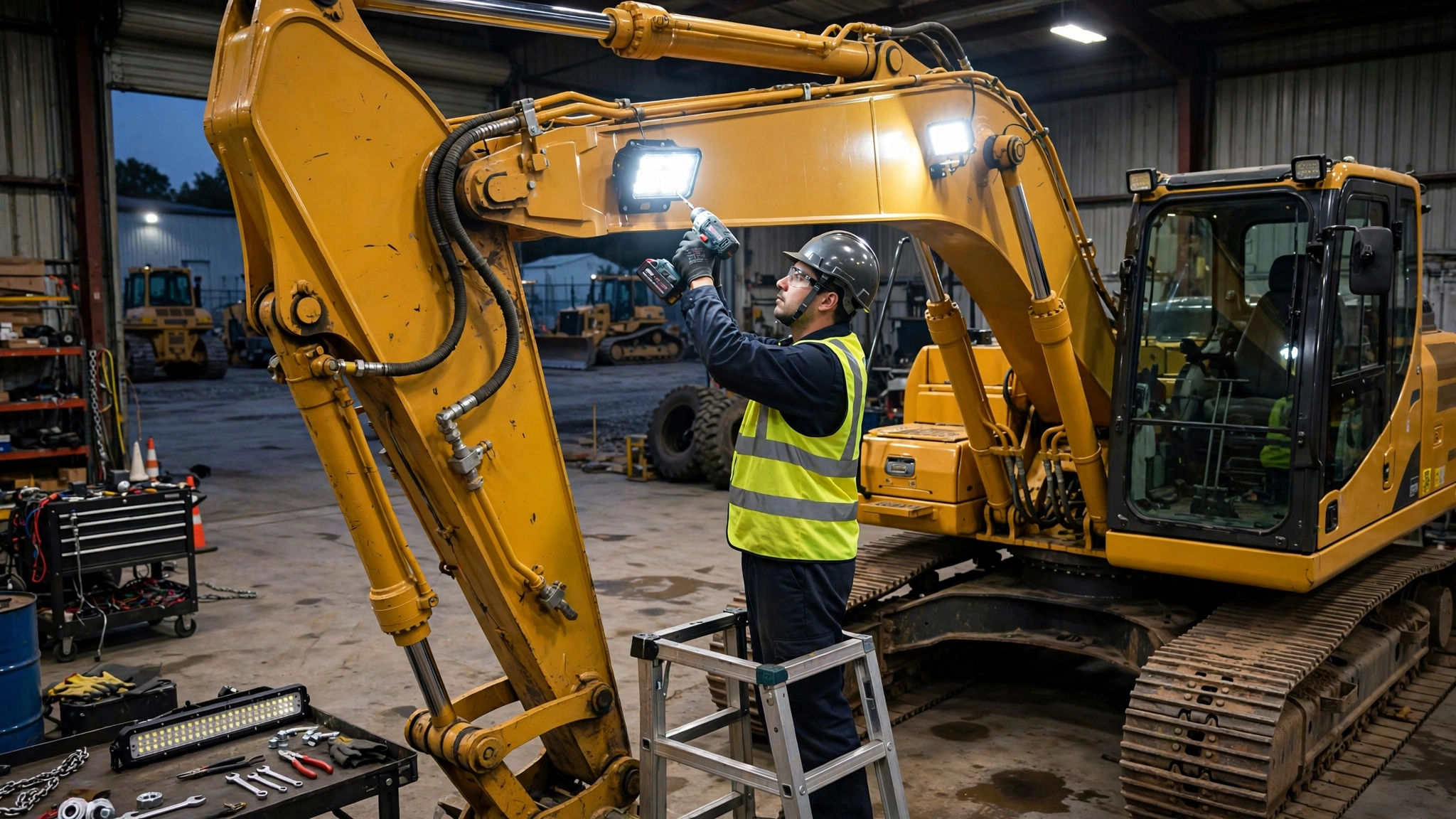
Professional Work Light Service for Construction Vehicles and Equipment
Work light service provides reliable lighting solutions for construction vehicles, heavy machinery, commercial fleets, and equipment used in dark or poorly illuminated environments. Construction work often continues during early mornings, late evenings, overnight shifts, and difficult weather conditions. Without suitable lighting, operators may struggle to see obstacles, materials, workers, and changes in the ground surface.
Professional work lights improve visibility around machinery and create a safer working environment. They can be installed on excavators, loaders, dump trucks, cranes, tractors, forklifts, vans, pickup trucks, trailers, and other specialist vehicles. The service may include new light installation, damaged light replacement, electrical fault diagnosis, wiring repairs, beam adjustment, and routine maintenance.
Every machine requires a lighting system suited to its size, electrical capacity, operating environment, and daily workload. A complete inspection helps determine the correct light type, brightness, mounting position, and wiring arrangement. Proper installation ensures dependable illumination without overloading the vehicle’s electrical system or interfering with its normal operation.
Complete Construction Work Light Solutions
LED Work Light Installation
LED work lights are widely used on construction vehicles because they provide powerful illumination while consuming less electrical power than many traditional lighting options. They also offer a long working life and perform well in demanding environments.
LED lights are available in different shapes, sizes, brightness levels, and beam patterns. Flood beam lights spread illumination across a wide working area, while spot beam lights project light over a longer distance. Combination lights provide both wide and long-range coverage.
Professional installation includes selecting secure mounting points, fitting suitable brackets, routing protected wiring, and connecting the lights through relays and fuses. The final position is carefully adjusted to illuminate the required area without creating unnecessary glare for operators or nearby workers.
Flood Light Fitting
Flood lights are designed to provide broad and even illumination around a construction vehicle or machine. They are especially useful for loading areas, excavation zones, material handling operations, roadworks, and temporary workspaces.
These lights may be installed on the front, rear, sides, or roof of equipment. Multiple units can be positioned to reduce dark spots and provide complete coverage around the machine. This helps operators reverse, lift, dig, load, and position materials more accurately.
Strong brackets are used to prevent movement caused by vibration, uneven ground, and heavy machine operation. Weather-resistant connectors and protective cable coverings are also fitted to reduce the risk of moisture damage, corrosion, and electrical failure.
Rear Work Light Installation
Rear work lights improve visibility behind construction vehicles and equipment. They are particularly valuable when reversing, loading, unloading, connecting trailers, or working near stored materials.
Standard reversing lights may not provide enough brightness for large vehicles or dark construction sites. Additional rear work lights offer wider and stronger illumination, allowing operators to identify workers, barriers, tools, and uneven surfaces more easily.
The lights can be connected to a manual dashboard switch, the reverse gear circuit, or a combined control system. The selected method depends on the vehicle’s use and the operator’s requirements. A professional installation ensures the lights activate safely and do not place excessive demand on the original reversing circuit.
Safe Electrical Installation and Wiring
Relay and Fuse Installation
Powerful work lights should not be connected directly to standard switches or existing light circuits without proper protection. Doing so may overload the wiring, damage electrical components, or create an overheating risk.
A relay allows the lights to draw power safely from the battery while the dashboard switch controls a lower electrical current. Correctly rated fuses protect the circuit if a short circuit, damaged cable, or unexpected electrical fault occurs.
Cable thickness is selected according to the number of lights, total power demand, and distance from the power source. This prevents voltage loss, dim lighting, and excessive heat within the wiring system.
Waterproof Wiring Connections
Construction machinery frequently operates in rain, mud, dust, standing water, and harsh outdoor conditions. Electrical connections must therefore be properly sealed and protected.
Waterproof plugs, heat-shrink tubing, protective conduit, and corrosion-resistant terminals help prevent moisture from entering the circuit. Wiring is routed away from exhaust systems, hydraulic components, sharp edges, moving parts, and areas where materials may strike the cable.
Secure clips and cable ties prevent loose wiring from hanging beneath the vehicle or rubbing against metal surfaces. Careful routing improves safety and supports long-term reliability.
Dashboard and Control Switches
Work lights should be easy to control from the operator’s position. A dedicated switch can be installed in the dashboard, control panel, or another convenient location.
Illuminated switches help operators identify whether the lights are active. Separate switches may be used for front, rear, side, and roof-mounted lights, allowing the operator to use only the required lighting zone.
Clear labels can also be added to avoid confusion, especially on machines operated by different workers. The controls are tested to ensure smooth operation and proper integration with the vehicle’s electrical system.
Work Light Repair and Maintenance
Electrical Fault Diagnosis
Work lights may fail because of blown fuses, damaged relays, poor earth connections, broken cables, faulty switches, corroded terminals, or damaged light units. Professional diagnosis helps identify the exact cause of the problem.
Electrical testing may include voltage checks, continuity tests, fuse inspection, grounding assessment, and connector examination. Finding the correct fault prevents unnecessary replacement of working components.
Once repairs are completed, the complete circuit is tested under operating conditions. This ensures the lights remain stable and do not flicker, overheat, or switch off during machine movement.
Damaged Light Replacement
Construction work lights may be damaged by falling materials, accidental impacts, vibration, branches, debris, and harsh weather. Cracked lenses and broken housings can allow water and dust to enter the unit.
Damaged lights should be replaced promptly to maintain visibility and prevent electrical problems. Replacement units are selected according to the original mounting size, voltage, beam pattern, and brightness requirement.
The brackets and surrounding structure are also inspected. If a mounting point has become loose or bent, it is repaired before the new light is installed.
Beam Adjustment and Alignment
Even powerful work lights are ineffective when aimed incorrectly. Machine vibration and impacts can gradually change the light position, creating dark areas or directing excessive brightness toward other workers.
Beam alignment ensures each light covers the intended working zone. Front lights may be angled toward the ground ahead, while side lights cover nearby working areas. Rear lights are positioned to support safe reversing and equipment connection.
All mounting bolts are tightened after adjustment to help the lights maintain their position during regular operation.
Benefits of Construction Work Lights
Improved Site Safety
Clear lighting allows operators to identify workers, machinery, materials, trenches, barriers, and uneven ground. Better visibility reduces the risk of collisions, equipment damage, and workplace accidents.
Work lights also help ground workers understand machine movements and remain visible to operators during night operations.
Increased Productivity
Poor lighting can slow construction work and make detailed tasks more difficult. Effective work lights allow operators to continue working accurately during low-light conditions.
Loading, digging, grading, lifting, inspection, and maintenance tasks can be completed with greater confidence. This supports productivity and reduces unnecessary delays.
Reliable Performance in Harsh Conditions
Construction work lights are designed to handle vibration, dust, moisture, temperature changes, and regular outdoor use. Professional installation improves their durability by protecting wiring and securing every component correctly.
Routine inspection and maintenance further reduce unexpected failures and help equipment remain ready for demanding site operations.
Dependable Work Light Service for Construction Equipment
Final Safety and Performance Testing
After installation or repair, the work light system is fully tested. This includes checking brightness, beam coverage, switch operation, wiring temperature, battery voltage, mounting stability, and circuit protection.
A final inspection confirms that every light operates correctly and provides suitable coverage. Professional work light service delivers dependable illumination, improved site safety, and better working conditions for construction vehicles, equipment operators, and surrounding workers.